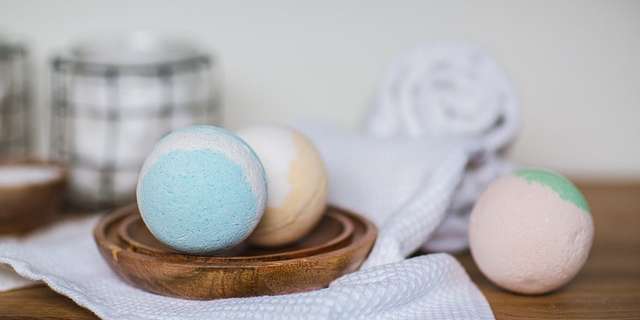
Because most bath bombs contain multiple colours, you need to use a colour measurement system to ensure that the colours match and remain vibrant. Image Source: Pixabay user StockSnap
A bright fuschia bath bomb hits the water and immediately starts to froth. Long streams of pink, purple, and red leak into the water, coating the top of the bathtub in a thick layer of colorful bubbles. But as the bath bomb dissolves and shrinks, unexpected colours begin to appear, from deep blues to rich emerald greens. This surprise pop of colour is what draws thousands of customers to bath bombs every year.
Unlike traditional bath salts and soaps, which are usually just one colour, bath bombs can contain as many as a dozen different layers of colour in a single package. For cosmetics manufacturers, this poses a challenge: how do you ensure that these colours will look appealing to customers, both before and after they hit the water? To solve this issue, you need an accurate colour measurement system for your bath bombs and multi-colored soaks.
You’ll Need to Measure Colour Twice
When you’re working with large batches of any commercial product, you need to ensure that your colours are consistent batch-to-batch. But a colour measurement system for bath bombs has to measure more than just consistency of each ingredient; it also needs to measure how the colours interact with water and with the other colours in the mix. For instance, if you add too many similar-looking colorants into a bath soak, you will likely end up with a product that looks muddy rather than multi-colored. Similarly, even if your bath bomb looks perfect when it’s dry, its colours might not mix well together in the water or could be duller in appearance than you expected.
Without testing how your colours mix together in water, you might accidentally release a product that looks brown in tone after customers put it in the water. This is a common problem when making bath bombs because companies often like to mix a primary colour with its complementary colour, causing the mix to turn brown.1 However, you can counteract this if you use colorants that can’t interact with one another in water or if you carefully measure the colours you use to ensure that their final blend is an appealing new colour. By measuring your colours twice (once during the dry, powdered stage, and again as a dissolved liquid sample), you guarantee that your bath bombs will look equally beautiful on the shelf as they do in the tub.
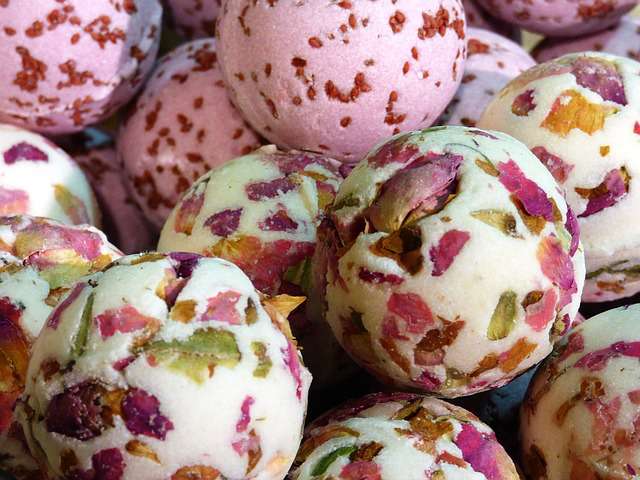
Some natural bath bombs and soaks contain solid materials or colorants that are less saturated than standard dyes. Image Source: Pixabay user Tomasz_Mikolajczyk