About
BLOG

Interested in a little light reading?

Our blog is continually updated with helpful educational information, advises, research and insights—all in the name of helping you level-up your color and appearance needs. Grab a drink and enjoy our stories!

Explore Stories

"Why Color Clarity Matters More Than Ever in the Shift to Natural Dyes"

Read

Explore Our Products

View More

"Why is it important to measure the color of Distillers Dry Grains with Solubles (DDGS)?"

Read

"What Is the Best Way to Measure the Color of Vegetable Oil?"

Read

"What's the Best Way to Measure the Color of Plastic Pellets?"

Read

"What Is the Best Way to Measure the Color of Plastic Bottles?"

Read

"What Is the Best Way to Measure the Color of Opaque Sheet Plastic?"

Read

"What Is the Best Way to Measure the Color of Opaque and Transparent Pellets?"

Read

Why Color Clarity Matters More Than Ever in the Shift to Natural Dyes

Posted on Jan 30, 2026 by HunterLab

If you're reformulating food products with natural dyes, you already know this isn't just a color conversation. It's also about clarity.

Today’s consumers want clean labels, but they also expect the vibrant, crystal-clear appearance they’ve always trusted. That’s why measuring both color and haze has become essential in food quality control, especially for transparent products like gelatin desserts and sports drinks.

At HunterLab, we understand that true visual quality isn't just about hue. It's about how that hue is seen. That’s why our Vista® spectrophotometer captures both color and haze in a single measurement, helping manufacturers navigate reformulation with confidence. Showing that we recognize replacing synthetic colors with natural colors is just not about finding a replacement color; it is about finding a natural color that will work in your product.

The Shift: From Synthetic Dyes to Natural Alternatives

Across the Food and Beverage industries, major food brands are stepping up to remove synthetic dyes, driven by federal initiatives and evolving consumer expectations. One iconic brand has already begun a multi-year journey to remove artificial colorants from its gelatin and powdered drink lines. The move reflects a broader industry trend: reduce, replace, and reinvent color systems using natural ingredients.

Sounds simple. But it's not.

Unlike synthetic dyes, natural pigments often don’t dissolve cleanly in water-based systems. They bring microscopic particles, create protein-polyphenol interactions, and can become unstable in acidic conditions. The result? A haze that dulls the product’s clarity—even when the color is technically “correct.”

Posted in Color In Food Industry

Why is it important to measure the color of Distillers Dry Grains with Solubles (DDGS)?

Posted on Jan 30, 2026 by HunterLab

What is DDGS?

Distillers dry grains with solubles (DDGS) is a feed ingredient substitute widely used for its high nutritional content and low production cost in the feed industry. It is a significant co-product of dry-milled ethanol production from corn. For every bushel of corn, dry-grind ethanol extraction yields ~10.22 L of ethanol and 8.16 kg DDGS.

When blended into the animal feed, DDGS provides a high-protein meal. It is also a good source of calcium, phosphorus, and sulfur and most commonly feeds cattle, dairy cows, swine, and some poultry. DDGS substitute roughly 1-to-1 for corn grain in feed rations.

The DDGS industry is booming.

According to the US Grains Council, high ethanol production across the country has led to the export of 11 million tons of DDGS to 69 countries in 2020/21 when compared to 5 million tons in 2009. Mexico is the biggest buyer, with over 18 percent of the export market. Vietnam, South Korea, Turkey, and Indonesia are the other top importers.

The future looks bright too. Data Bridge, a leading market research organization, projected the demand for organic DDGS to grow at a rate of 7.00% in the 2020 to 2027 forecast period and expected to reach USD 20.95 billion by 2029.

Posted in Industries

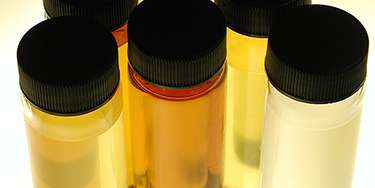
What Is the Best Way to Measure the Color of Vegetable Oil?

Posted on Jan 28, 2026 by HunterLab

Vegetable oils like soybean oil play a pivotal role in many products and applications, from snack food manufacturing to biodiesel fuel development, commercial frying, and personal hygiene goods production. Its color directly correlates to integrity and customer perception, demonstrating the need for accurate measurements throughout manufacturing processes.

The Importance of Color Measurement in Vegetable Oil

Quantifying color in vegetable oils is essential for many reasons:

  • Quality: Color and clarity are primary quality and purity indicators in edible oils. Consistent measurement helps ensure adherence to implemented quality assurance methodologies and supports consumer confidence.
  • Money savings: Refining processes can substantially impact oil color. Establishing that color falls within tolerances at each stage helps minimize waste and prevent downstream bleaching and blending issues that can be costlier to resolve.
  • Conformance with industry standards: The American Oil Chemists' Society (AOCS) issues industry guidelines for oil analysis, including color measurement methods, suitable color models, and standards. Manufacturing contracts and specifications often require following the organization's frameworks.
  • Regulatory compliance: Vegetable oil processing and manufacturing facilities must comply with regulations set forth by the Food and Drug Administration (FDA) and the United States Department of Agriculture (USDA). Both consider color to help ensure quality and consumer safety.

Posted in Food

What's the Best Way to Measure the Color of Plastic Pellets?

Posted on Jan 28, 2026 by HunterLab

Using a spectrophotometer is the best way to measure the color of plastic pellets. These technological devices deliver reliable and accurate measurements that help you ensure the color remains consistent with each batch while adhering to industry standards.

Measure the Color of Plastic Pellets Using the Right Equipment

Plastic pellets vary in transparency and opacity, so you should use the appropriate measurement equipment and accessories for accurate results. Plastic pellets should be measured with a reflectance spectrophotometer. Opaque plastic pellets require only a sample cup, while transparent plastic pellets may require the use of an opaque cover. 

Keep Industry Standards in Mind

An effective color measurement system follows industry standards. As a part of quality and process control, it's important to measure the color of plastic pellets according to the testing standards set by ASTM. Plus, following the standards ensures you measure the pellets more accurately for consistent results.

Spectrophotometers can help you adhere to industry standards by offering a straightforward way to meet the outlined specifications.

Assess the Degree of Yellowness

Achieving clear and consistent colors is critical in plastic production. However, plastic resin can turn yellow when subjected to oxidation. Yellowness directly impacts the value and perceived quality of plastic products. To prevent the yellowish appearance, optical brighteners are used to make the plastics look more clear or white. 

Optical brighteners are also often used to enhance the appearance of recycled plastics. As a result, it's essential to assess the degree of yellowness in plastic resin to determine the appropriate concentration of optical brighteners needed to counteract the yellowing effect of plastics throughout the supply chain.

As the plastic production industry moves toward using recycled plastics, you'll need a robust spectrophotometer that can measure the color and fluorescence quality of virgin and recycled plastic resin and a combination of the two. By doing so, the spectrophotometer can help mitigate yellowness and ensure the optical brighteners are adjusted for at every stage of the production process. 

Posted in Explore By Category

What Is the Best Way to Measure the Color of Plastic Bottles?

Posted on Jan 28, 2026 by HunterLab

The use of plastic bottles in liquid packaging first became popular in the 1950s and 1960s. Today, plastic's cost-effectiveness, durability and recyclability have made it the go-to material for bottles among most major companies. Throughout the manufacturing of these bottles, it is vital that processors maintain accurate coloration. Any product entering the sales market should be uniform and consistent, down to the label and the packaging. This level of precision calls for specialized tools — and HunterLab provides them.

The Power of Spectrophotometers 

When you need to measure the color of plastic bottles, spectrophotometers offer the most objective and precise results. A spectrophotometer measures how light reflects off the bottle and uses those measurements to produce a numerical value in line with some of the most well-known color indices. 

Spectrophotometers make it easy for any brand to streamline its coloration practices and increase product consistency. Their use can translate to major benefits in:

  • Brand identity: Plastic bottles can be manufactured in almost any color, so many brands produce their bottles using a unique pigment combination to set them apart. Coloring bottles consistently allows you to establish your own look that consumers will begin to recognize over time, even before they see the label.

  • Consumer satisfaction: Changes in any part of your product or its packaging — including a significant color departure — can signal to loyal consumers that your product has changed in some way. By keeping your colors consistent, you can put consumers at ease and ensure they stay with your brand instead of choosing a competitor. 

Posted in Plastic

What Is the Best Way to Measure the Color of Opaque Sheet Plastic?

Posted on Jan 28, 2026 by HunterLab

Maintaining consistent color in opaque sheet plastic is crucial for manufacturers. Even slight color variations can impact brand identity and product quality. The right tools and techniques can achieve precise color control, ensuring every sheet matches your specifications. 

The best way to measure the color of opaque sheet plastic is by using a spectrophotometer. These solutions analyze light reflected from a sample and translate it into numerical data. This data represents value in a defined color space, allowing for objective and repeatable measurements.

Factors Affecting the Appearance of Opaque Plastics

When measuring color in opaque materials, we focus on reflectance. Reflectance is how light interacts with the plastic's surface and reflects on our eyes. Various aspects can influence how color appears on opaque materials, including:

  • Opacity: This refers to the material's ability to block light. Opaque plastics do not allow light to pass through. While not directly related to color measurement, opacity can affect color perception.
  • Surface texture: Glossy or matte finishes impact how light interacts with the plastic, influencing the perceived color. Standardizing surface texture provides a complete picture of the plastic's visual characteristics.
  • Lighting conditions: The type of light source can affect how color appears. Standardizing lighting conditions during color measurement is crucial for consistent results. 

Posted in Explore By Category

What Is the Best Way to Measure the Color of Opaque and Transparent Pellets?

Posted on Jan 28, 2026 by HunterLab

A spectrophotometer is the best way to measure the color of opaque and transparent pellets. The color measurement solution enables you to maintain color consistency to meet industry standards and improve the pellets' appearance.

Measure Pellets With the Right Equipment

When measuring the color of opaque and transparent pellets, it is essential to utilize a spectrophotometer that considers opaqueness and transparency. Spectrophotometers that measure reflectance are well-suited for evaluating both opaque and transparent pellets.

Prepare Your Samples

A standard procedure needs to be implemented when preparing and presenting samples. Having procedures that everyone follows helps limit any inconsistencies between samples to ensure more accurate results. Consider developing a repeatable sample preparation method for repeated results.

Maintain Industry Standards When Measuring

Posted in Plastic
Prev
1
2
3
…
Next

Most Related Posts

  • Why Color Clarity Matters More Than Ever in the Shift to Natural Dyes
  • Why is it important to measure the color of Distillers Dry Grains with Solubles (DDGS)?
  • What Is the Best Way to Measure the Color of Vegetable Oil?
  • What's the Best Way to Measure the Color of Plastic Pellets?
  • What Is the Best Way to Measure the Color of Plastic Bottles?
  • What Is the Best Way to Measure the Color of Opaque Sheet Plastic?
  • What Is the Best Way to Measure the Color of Opaque and Transparent Pellets?
View More

Follow Us

  • LinkedIn
  • YouTube
  • facebook
  • X
  • instagram