
Colorimetry is the science of the measurement of colour. Colorimetry is used for replacing subjective responses of colours with an objective numerical system. It involves measuring the concentration of a colored compound in a solution and the reflected or transmitted light of a solid transparent or opaque object.

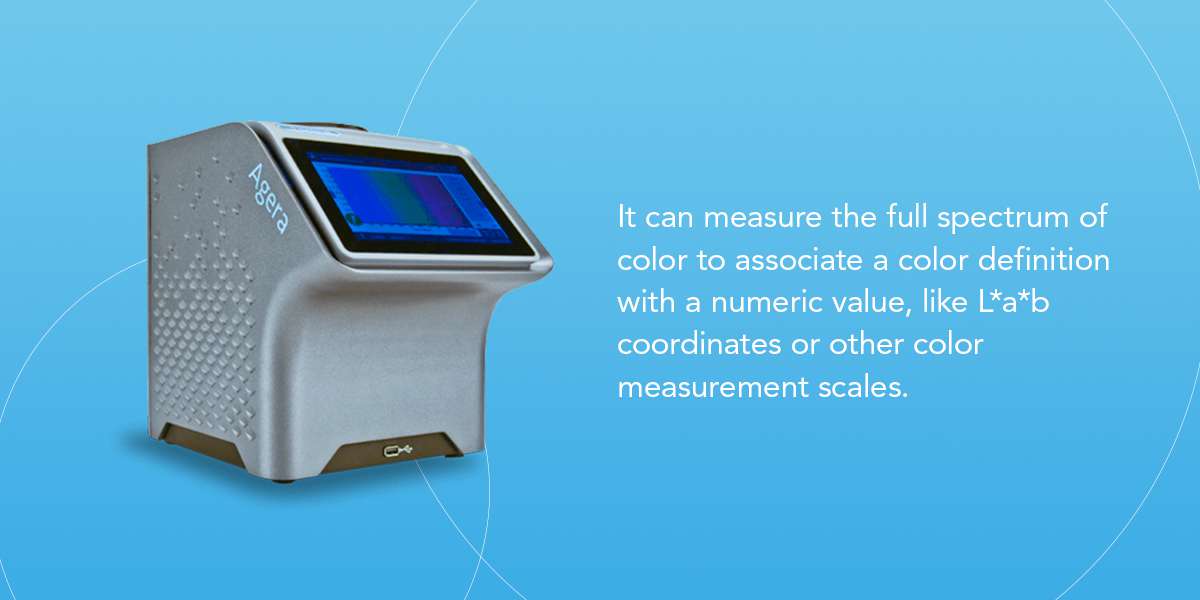
A spectrophotometer is a light-sensing device that measures colour within the human visible light wavelength to remove human subjectivity for colour definitions. Spectrophotometers are valuable measuring tools for various industries and play critical roles in our everyday lives.
Read  Food Coloring Regulations and Standards

6 Everyday Uses and Applications of Colorimetry

Spectrophotometers and colorimetry play critical roles in various applications beyond science classrooms. Specific uses of colorimetry in real life include:

  1. Education: Schools use colorimetry to help students with learning disabilities by placing a colour overlay over their reading material or allowing them to use tinted glasses.
  2. Engineering: Colorimetry is vital in optical engineering, specifically for research and development. Most of the newest photography and camera technologies use colorimetry principles to produce real-life colour matching.
  3. Medical research: Chemists and biologists use colorimetry for blood testing and analysis, laboratory quality control, calculating reaction rates, and determining bacteria growth. Doctors use colorimetry to evaluate skin tones and teeth to screen for potential diseases.
  4. Agriculture: Besides recognizing impurities in a water supply, spectrophotometers can identify chlorophyll, glucose, nitrate, and ammonium concentrations in plants. Spectrophotometers can also evaluate potassium, nitrogen, and phosphorus levels in soil — all vital components of growth and high crop yields.
  5. Food and beverage processing: Colorimetry is vital in the food and beverage industry because achieving the right colour is critical for establishing quality, process control, and brand consistency.
  6. Commercial printing: In the printing industry, spectrophotometers are the colour management system’s primary measuring tools. They can also help evaluate paper and ink quality through substance analysis.
INFO  Get More Information
Why Color Spectrophotometers Are Best for All Uses of Colorimetry

Why Colour Spectrophotometers Are Best for All Uses of Colorimetry

Two types of devices for colour measurements include spectrophotometers and colorimeters. A colorimeter quantifies colour by measuring the three primary colour components of light. However, it cannot identify metamerism, limiting its use for colour formulation and quality control.

For any real-life use of colorimetry, a spectrophotometer is the ideal method. It can measure the full spectrum of colour to associate a colour definition with a numeric value, like L*a*b coordinates or other colour measurement scales. This value defines and communicates colour more accurately than human subjectivity. Unlike colorimeters, spectrophotometers can identify metamerism and effectively mitigate the challenges of viewing colours under various light sources.

Contact HunterLab Today for More Information on Colorimetry

If you’re ready to learn more about colorimetry, the professionals at HunterLab can answer your questions or help you find a spectrophotometer for your specific application. Contact us online today for more information. You can also follow our blog for more comprehensive posts about colour science.