

Many variables affect colour and visual appearance. Light, angle, and/or background all affect visual analysis and cause major variations in colour perception. Image Source: Daniel Christensen via wikimedia.org

The human eye is a remarkable tool in identifying colour variations. In fact, the human eye can actually distinguish over 7,000,000 different colour variations in our known spectrum of colours. Science and technology have explored the eye-to-brain connection of how light is absorbed and reflected, and these results have shown that the human eye is capable of distinguishing even the slightest deviations in colour.

Despite how amazingly accurate and complex human vision can be, the eye and the brain do have their limitations. Optical inputs of colour variations are altered by a variety of causes that lead to problems with visual analysis, especially in plastic manufacturing. Manufactures have to be incredibly precise when creating their products, to account for the variations in the way we see things, and to mitigate against their negative effects. Spectrophotometry tools are incredibly useful in this process.

Limitations of the human eye

In the same way that no two people are alike, colour perception also varies greatly from person to person. Colour variations have also been noticed in many individuals between left-eye and right-eye differentiation. Even as you look at this screen, if you shut one eye and then alternate viewpoints with the other, you may notice the slight variations in colour from your own unique perspective.

Though we all view colours in relatively the same way, our unique genetic make-up also plays an important role in how we differentiate between colour variations. Just like any other physical ability or trait, vision varies in aptitude as well. It can range from highly effective to somewhat defective in its ability to classify colour. From good to poor colour vision or even colour blindness, everyone has limitations when it comes to colour analysis.

Take for instance the ability to see in the dark. The human eye is not able to distinguish colour at all without some source of light. Even with minimal lighting, our brain will interpret colour using only a limited scale of grey. It is certain that the human eye is a powerful tool, but despite its amazing competencies, we can see that there are a number of other factors that limit our abilities in perceiving colour variations. Only with advanced spectrophotometric technology and controlled conditions can the brain accurately and consistently decipher variations in colour.
Read  Analysis of Sunglass Lens Colour and Tint Leads to Better Performance in Outdoor Eyewear

Variations in light that affect colour-analysis

Lighting is another factor that can have an immeasurable effect on colour variations and visual perspectives. Take, for example, the image above.

Significant research has been done on the study of light variation and metameric matching when it comes to colour variations and analysis. I am sure we have all witnessed these limitations ourselves when it comes to differentiating between colours. Varying shades of blue and black in that pile of dress socks may look deceptively similar in the morning, yet become visibly mismatched when viewed under the florescent lights at work. The problem is not in our visual abilities but in the immense variations in lighting that surround us every day. Our ability to isolate or recreate lighting environments with consistency and accuracy are nearly impossible without the use of colorimetric technology and spectrophotometers.

Visual fatigue

Lighting alone can play havoc on the human eye and the messages that it sends to the brain, but when you add in the brain’s physical response to over-use or exposure to specific colours, the eye-to-brain connectors can misfire at will. According to Science Dictionary (The World’s Largest Online Science Dictionary), visual fatigue is “partial loss of visual perception or discrimination as a result of prolonged exposure of the eye to high levels of illumination or light of a dominant colour.” Even someone with perfect vision can develop signs of visual fatigue that affect their judgment and ability to differentiate variations in colour, especially when that task is repeated frequently. Proper use of colorimetric technology and spectrophotometers help aid in visual functioning and colour differentiation, and help to lower the level of optical fatigue that can interfere with colour perception.

HL-Solutions-for-Plastic-Industry1.jpg

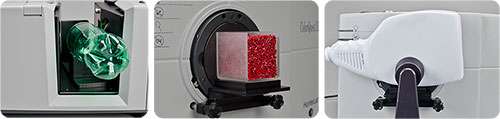
Technology for colour variation measurement and applications in plastic.

INFO  Get More Information

Solutions for colour variation measurement and applications in plastics industry

The solution to colour measurement, colour variations, and differentiation are now available through colorimetric technology and spectrophotometry. In plastic manufacturing, colour plays an important role in quality and consistency of a product and HunterLab offers innovative and cost-effective solutions that can scientifically measure and compare a variety of materials and products. Consistency in colour measurement is essential to product development and quality. HunterLab is here to address all of your colour application and technology needs. VisitHunterLab today to learn more.