Every person perceives colour differently. A unique combination of genetics and circumstances influences each individual's connection to and view of various hues. If you've ever had the experience of talking with an older adult and disagreeing on the colour you're both seeing, you may find yourself questioning whether colour perception changes with age — and sometimes, it can.
Differences in Colour Perception
Some of the reasons you may perceive a different colour than the person next to you may include:
- Genetics: The most well-known reason for differences in colour perception is genetics. Colour blindness affects one in 12 men and one in 200 women, usually due to a genetic marker in the X chromosome.
- Culture: Different geographical locations place varied emphasis on colours, combining hues like blue and green or navy and black into one word in their languages. Some languages have even more words to describe different shades.
- Trauma: Occasionally, injury or illness can bring on partial blindness or colorblindness that affects colour perception. Common causes include brain or eye injury or an illness like diabetes.
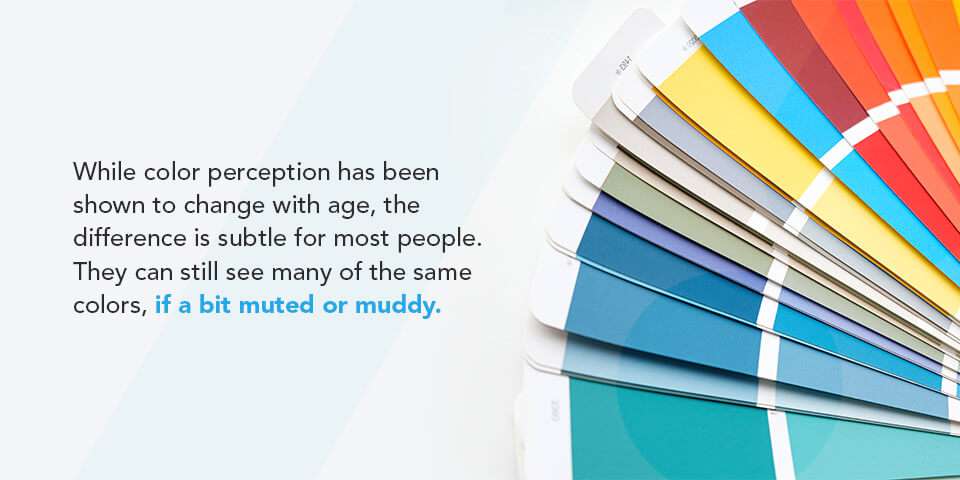
- Age: While your perception of colour may remain the same for most of your life, your eyesight can begin to change and deteriorate as you age. Some people develop a yellowish tint to their vision, most often after age 70, which can affect their ability to differentiate between shades of yellow, blue, and green.