
Top-Rated Colour Measurement Solutions for Quality Assurance include devices like spectrophotometers that use optical geometries (such as 45°/0° and d/8°) to ensure precise, reproducible colour measurements across batches and locations. The best solutions will:

  • Measure both reflectance and transmittance colour accurately.
  • Support sample averaging for uneven textures.
  • Integrate seamlessly with QA software.
  • Come from trusted manufacturers like HunterLab.

Looking for the top-rated colour measurement solutions for quality assurance? Whether you're in food production, pharmaceuticals, plastics, or textiles, accurate colour measurement is critical to maintaining quality, consistency, and compliance. In this guide, we’ll break down what makes a solution “top-rated” and how to select the best spectrophotometer based on your sample types, workflows, and regulatory needs.

As a manufacturer, you know best how fierce the market you operate in can be. Every advantage that sets your products apart on crowded shelves is one worth creating and maintaining, making quality nonnegotiable as a competitive advantage. Accurately determining product colour is instrumental in upholding quality, which is where top-rated colour measurement solutions deliver tangible value.

Maximize your investment by understanding the connection between colour measurement and quality assurance (QA) and exploring tips for choosing the best colour measurement solutions.

Why Top-Rated Colour Measurement Devices Are Essential for Quality Control

Colour measurement and quality assurance are inarguably entwined. Achieving and maintaining a consistent appearance across products, batches, and facilities helps your organization:

  • Meet consumer expectations: Visual interactions are among the first experiences customers have with your products, and they're a key driver in their purchasing decisions. If goods don't meet their appearance expectations, consumers will quickly form a negative impression of your brand and reach for a competing product instead.
  • Reduce waste: Manufacturing certain products requires tight colour tolerances. For example, colour can indicate the efficacy of active pharmaceutical ingredients. Medications that don't meet colour specs could be unsafe and must be discarded. Consistent measuring of colour at each step helps prevent waste and resulting financial loss.
  • Achieve brand recognition: Consumers often associate specific colours with the brands they're loyal to. Ensuring these colours are consistent upholds integrity and strengthens recognition.
  • Comply with regulations: If your operations fall under the oversight of governmental agencies like the Food and Drug Administration (FDA), colour measurement is critical to preventing costly noncompliance fines and penalties.

Traditionally, streamlining QA workflows for colour and quality measurement to achieve these goals was challenging. Visual colour inspections and comparisons are unreliable and inherently subjective. Evaluator fatigue and differences in the observational environment often produce errors.

Top-rated colour measurement solutions, like spectrophotometers, are the smartest approach to measuring colour quality. These devices accurately determine colour by quantifying the intensity of light at various wavelengths, transforming reflected or transmitted light into objective numerical values. Integrating a top-rated spectrophotometer from a respected manufacturer like HunterLab helps you elevate colour control processes, ensure product visual integrity, and support your products' overall success.

Use the following criteria to evaluate top-rated colour measurement solutions for your QA workflows.

1. Consider Your Sample Properties
02-the-best-rated-spectrophotometer-for-you.original.jpg

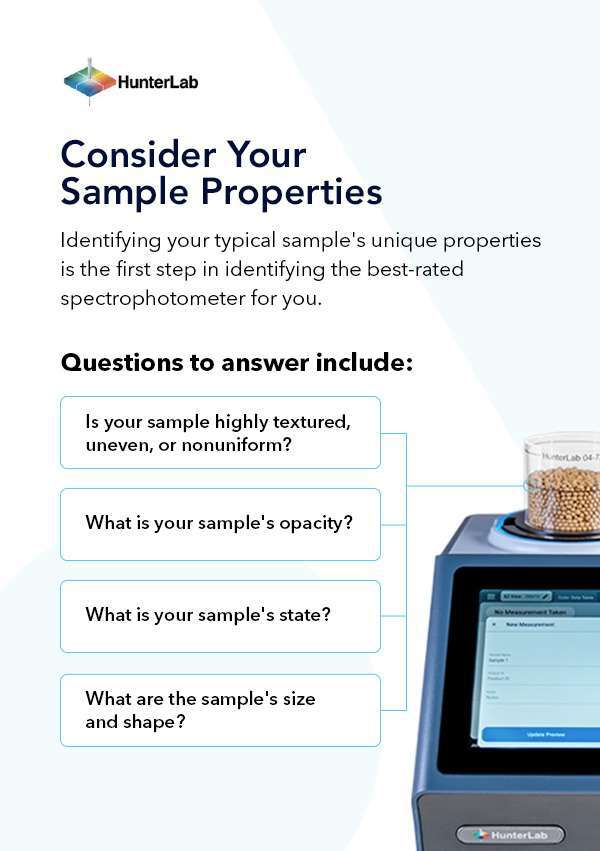
Identifying your typical sample's unique properties is the first step in identifying the best-rated spectrophotometer for you. These traits determine the necessary optical configuration, geometry, features, and accessories for the task.

Questions to answer include:

  • Is your sample highly textured, uneven, or nonuniform? These products create unique challenges for colour quality control and require solutions designed for the inherent variations.
  • What is your sample's opacity? Transparent samples require one measurement approach, while fully opaque samples require another. The best measurement method for translucent samples differs based on how much light can pass through them.
  • What is your sample's state? Solids and liquids need different measurement techniques and accessories. For example, loose powders may need special sample holders or port plates for accuracy, while liquids require cuvettes and may need flow cells.
  • What are the sample's size and shape? Samples in some industries, such as pharmaceuticals, are costly. Small-volume containers and a spectrophotometer capable of accurate readouts on minimal sample sizes are essential for cost containment.
Read  Temperature Effects on Colour Measurement: Maintaining Accuracy in Extreme Conditions

2. Determine the Key Features to Look for in Top-Rated Colour Measurement Solutions

Capabilities and features differ between different spectrophotometric solutions and manufacturers. Evaluating the following aspects supports more informed decision-making. 

Optical Configurations

Spectrophotometers have two primary optical configurations to capture and analyze colour data — transmission or reflectance. As their names suggest, devices that measure transmittance quantify data on the light that passes through a sample, while those measuring reflectance analyze the light a sample reflects.

Transmission measurement is appropriate only for transparent to translucent samples that allow 30% or more of the light to pass through. Conversely, translucent to opaque samples with light pass-through of 30% or less require reflectance measurements. Ensure the device you choose for colour quality measurement offers the optical configuration you need for accurate readouts.

Geometry

Spectrophotometers have two distinct geometries — diffuse spherical and directional — which refer to the relative positioning of the sample plane.

Diffuse d/8° spherical geometry offers even illumination from all angles while capturing reflected light at an 8° angle from the sample surface. This geometry is ideal for simultaneously measuring colour and haze and ensuring precise colour consistency in samples with variations, since you can measure in specular-included mode to negate the influences of texture, pattern, or gloss. D/8° spectrophotometers for colour measurement also typically quantify data in transmission mode for extra application versatility.

Directional 45°/0° or 0°/45° spectrophotometers are designed to replicate how the human eye perceives colour with bidirectional, annular, or circumferential light sources. When humans visually evaluate colour, colorant and surface characteristics shape the final perception. Directional geometry excludes specular reflectance and is highly sensitive to any appearance change, just as humans are. As a result, this measurement approach is ideal for QA workflows prioritizing batch-to-batch consistency and overall appearance.

Research potential solutions carefully to ensure they offer the right geometry to meet your objectives. Doing so is critical to accurate outcomes and colour consistency.

Reproducibility and Accuracy

Today's production environments include multiple batches that may also span geographic locations and production lines. Consistent colour measurement alone isn't enough to uphold the hard-earned quality reputation you've built — you also need to ensure that your workforce can reproduce the results across batches, locales, and production stages.

Investing in a highly accurate colour management solution with exceptional inter-instrument agreement is one of the most effective ways to support reproducibility. Doing so ensures that readouts are the same across facilities, batches, and production lines by empowering:

  • Precise measurement of spectral data.
  • Reliable, consistent chromatic quantification in similar controlled environments.
  • Reliable colour matching against standards.
  • Precise numerical data exchange within a shared colour language.

Speed

Speed in modern manufacturing isn't a luxury. It's a necessity to meet rising consumer expectations while supporting high throughput and a healthy bottom line. That means busy QA labs need a solution for colour quality that can keep pace. As a result, evaluating the speed with which a spectrophotometer can generate accurate readouts is crucial to avoid production bottlenecks and reduce turnaround times.

When assessing speed, it’s important to consider factors like the aperture size or measurement area to identify how much of the sample is captured in a single reading. The larger the sample you can quantify in one measurement, the quicker you can make QA colour decisions and release the goods. Other key considerations include measurement duration — how long it takes the device to capture data — and time between measurements, or how quickly the equipment is ready to measure again.

Determining these precise speed requirements for each colour workflow will help you identify the best spectrophotometer for your needs.

Sample Averaging Functionality

03-Advanced-spectrophotometers.original.jpg

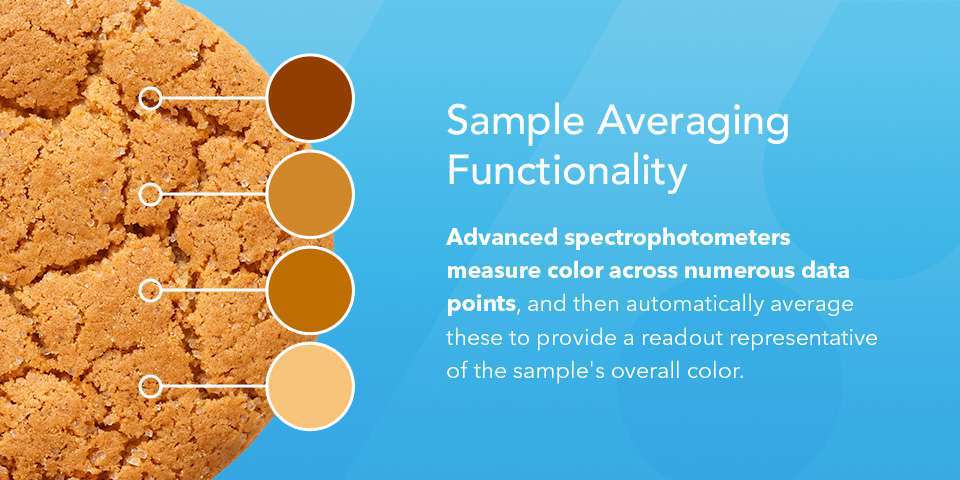
Samples that vary in size, texture, and surface uniformity, such as many snack foods and textiles like carpets, may appear as different colours in different measurement areas due to their nonhomogeneous nature. Using spectrophotometers for accurate colour measurement on these samples is the best solution, and top-rated units offer sample averaging and large viewing areas.

Sample averaging is the process of capturing multiple readouts and translating them into a single numerical value. Advanced spectrophotometers measure colour across numerous data points, and then average these to provide a readout representative of the sample's overall colour. Doing so helps ensure colour consistency across a batch or production line, even when natural colour variations occur

Larger viewing areas are typically recommended when using sample averaging. Spectrophotometers with that feature support higher accuracy since the device can capture data over a greater sample size.

Accessories Available for Measurement Versatility

A comprehensive selection of accessories equips the best spectrophotometers for maximum versatility and value. Reputable, experienced manufacturers offer innovative accessories to help achieve these goals. Browse what's available, and look for options like:

  • Keyboards, printers, and monitors that easily connect to the spectrophotometer.
  • Transmission cells and clamps.
  • Sample cups, holders, covers, and trays.
  • Port inserts to adjust the viewing area.

With careful thought, you can gain additional functionality in one production step, simplify sample preparation and presentation, and process various sample types with one device.

Compatibility With Applicable Industry Standards and Regulatory Requirements

Compatibility with applicable industry standards is essential when choosing a spectrophotometer because it directly impacts data reliability, acceptance, and usability.

These frameworks:

  • Promote data acceptance and comparability: Industry standards help establish accepted measurement protocols and create a shared, global understanding of the numerical values.
  • Support regulatory compliance: Many industries, such as food production, are heavily regulated by various government agencies worldwide. Spectrophotometric data forms an auditable record that helps document compliance with the laws.
  • Uphold colour integrity in the industry: Certain products have specific colour scores, indices, or scales established by industry associations. For example, the American Spice Trade Association (ASTA) establishes measurement protocols and colour standards for paprika and oleoresin spices.

A top-rated spectrophotometer includes an extensive built-in library of colour standards and simplifies data documentation to support conformance.

3. Determine Where Colour Measurement Fits Into Your Workflows

No two modern manufacturing environments are alike, so no one colour measurement system meets all needs. Workflows differ, and processes may cause colour variations. As a result, your operations may require colour measurement at multiple production stages to ensure quality and consistency. 

The availability of different device types, sizes, and orientations enables you to match equipment to workflows and implement the ideal unit at the perfect spot in production. Start by detailing your manufacturing processes and noting each step where operators are measuring colour. Then, use those steps to guide your choice of the best spectrophotometer for the task. For example:

04-The-best-spectrophotometer-for-the-task.original.jpg
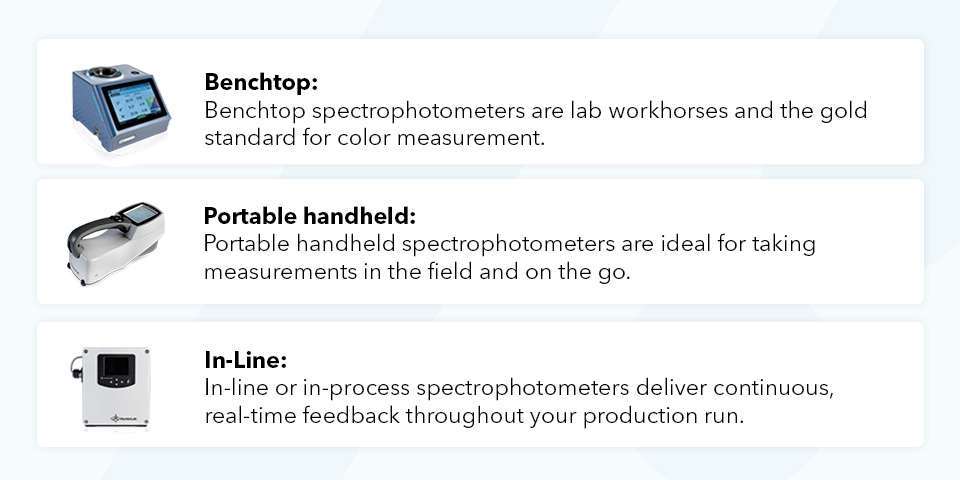
  • Benchtop spectrophotometers are lab workhorses and the gold standard for colour measurement, with top-rated models offering directional, sphere, and no-contact directional geometries for versatility in many industries. These devices provide full colour-measurement capability in a compact size that saves valuable lab space.
  • Portable handheld spectrophotometers are ideal for taking measurements in the field and on the go, since there’s no need to transport the sample to the lab for QA. These are available in both directional and diffuse options to meet your sample’s needs.
  • In-line or in-process spectrophotometers deliver continuous, real-time feedback throughout your production run. Their speed and efficiency empower fast QA decision-making to promote consistent product quality and high throughput.
INFO  Get More Information

4. Evaluate Ease of Use and Integration Capabilities

The best colour measurement instrument will offer exceptional ease of use. If equipment is too complex for operators, they'll be less likely to adopt it and more likely to try to find ways to circumvent colour measurement. Neither empowers your organization to uphold its commitments to consistent product and colour quality.

Look for spectrophotometers specifically designed for user-friendly, intuitive navigation. Manufacturers who understand operator frustrations focus on the end-user experience to eliminate them. Easier-to-use devices translate into reduced training times, which helps offset skills gaps and the lengthy training curves caused by employee turnover.

Additionally, the best solutions for colour measurement include built-in software and superior integration capabilities. Research options that function as independent colour workstations to eliminate reliance on connections to external PCs or laptops. It's also vital to ensure the device has multiple connectivity points. Features like Ethernet connections support higher productivity by allowing direct communication with Laboratory Information Management Systems (LIMS) and Statistical Process Controls (SPCs). Similarly, USB ports enable fast data migration, so it's quick and easy to export your readouts for printing or further analysis.

5. Choose Trusted Manufacturers of Top-Rated Colour Measurement Systems

Before investing in a spectrophotometer, it's crucial to research the people and company behind it. Working with an established manufacturer offers benefits like:

  • High accuracy and precision: Reputable manufacturers follow strict quality guidelines and use first-rate components to ensure their spectrophotometers deliver accurate, precise colour measurement results.
  • Innovation: Leading manufacturers work tirelessly to improve their products, resulting in faster speeds, additional features, and the integration of cutting-edge technology.
  • Diverse solutions for colour management: Established manufacturers typically offer multiple styles of spectrophotometers to meet various needs. Options also often include industry-specific solutions.
  • Simple integrations: An experienced spectrophotometer manufacturer offers devices that integrate seamlessly with workflows, technology accessories, and QA laboratory systems and software.
  • Compliance support: Reputable manufacturers understand regulatory agency mandates. They help their customers comply with them through factory-set calibration, traceability, and periodic certification of calibration.

Fortunately, there are several ways you can identify a reputable manufacturer:

  • Research their history: Visit a manufacturer's “About Us” page to see how long the company has been in business and what they've achieved during their history.
  • Evaluate their certifications: Companies with numerous industry certifications demonstrate their commitment to quality, sustainability, and other markers of excellence.
  • Investigate support and dependability: You want to know that the manufacturer will be there to help if you have problems or questions, so browse support resources and assess the company's reliability.
  • Review real-world results: Many manufacturers display customer success stories, case studies, testimonials, and reviews on their websites. This information can help you make a more informed decision based on the experiences others have had.

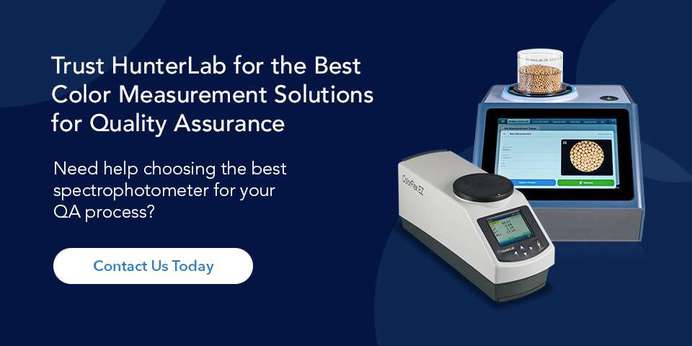
Trust HunterLab for the Best Colour Measurement Solutions for Quality Assurance

At HunterLab, we specialize in top-rated colour measurement solutions for quality assurance across industries. From benchtop to inline and portable spectrophotometers, we help manufacturers achieve colour consistency, regulatory compliance, and production efficiency. Need help choosing the best spectrophotometer for your QA process? Contact our colour experts today.