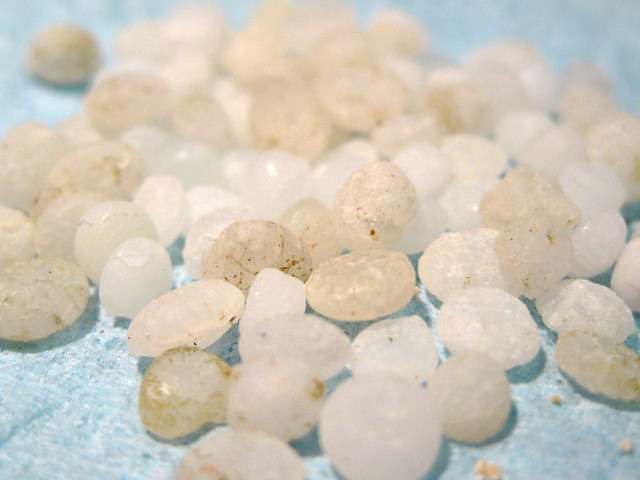
Colored pigment is often added to naturally colored plastic pellets to alter final colour results. Image Source: Flickr user tiffany terry \
Whichever method is used to alter the colour of the plastic product, each one will undergo various changes throughout processing. Continual monitoring of colour pigment, dissolved pigment, natural raw plastic materials, and final product colour is needed to provide valuable data that can alert production changes and guarantee desired results.
Colour Pigment Analysis
Plastic pellet colour is most often analyzed before the pellets are extruded or molded into final products. Colour pigment measurement is an important step towards ensuring that these raw materials will produce the desired colour results. Spectrophotometers offer a quick and simple method of colour pigment analysis that can be quantified and repeated to help maintain consistency and quality.
These materials often exhibit differences in shape, texture, and transparency. Therefore, colour measurement instrumentation must be designed to measure a variety of sample attributes. From powdered colour pigment to dissolved liquid samples to plastic pellet materials that vary in transparency, spectrophotometers rely on advanced geometric principles to accurately quantify colour and develop the data need to reproduce these colour effectively. Advanced spectrophotometers allow for rapid, in-line colour process monitoring to continually monitor colour changes and provide valuable feedback for processing adjustments and changes.