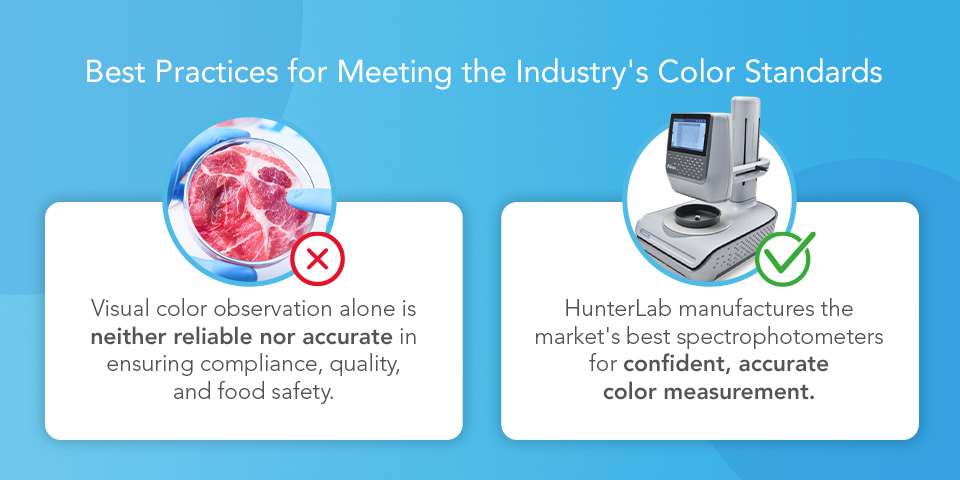

The colour of meat and proteins significantly impacts regulatory compliance, grading, customer perception of quality, and safe consumption. Maintaining colour within the industry standards helps ensure your facility meets quality expectations, reduces product waste, and supports higher customer satisfaction.
Why Colour Standards Matter in the Meat and Protein Industry
Both the Food and Drug Administration (FDA) and the United States Department of Agriculture (USDA) regulate meat and meat products. The USDA enforces colour standards for foods subject to the Federal Meat Inspection Act, Poultry Products Inspection Act, and Egg Products Inspection Act. All others fall under FDA regulations, including game meats, processed meats, and plant-based meat alternatives with colour additives. Failure to comply with the rules leads to substantial penalties.
Colour also plays a role in certified meat quality. For example, the USDA assesses the colour of the longissimus dorsi — the ribeye muscle — when determining its grade. Similarly, pork quality is partially determined by the colour of the body cavity's interior muscles.
Additionally, colour remains a primary purchasing determinant for consumers. Meat and protein products with appealing colours look fresher and healthier. Those without the required oxygen exposure don't form the oxymyoglobin pigment that creates a pleasing cherry-red hue that encourages consumption.
Meat colour changes can also indicate spoilage, typically presenting as either fading or darkening. Products displaying these characteristics are unsafe to eat and can cause illness.