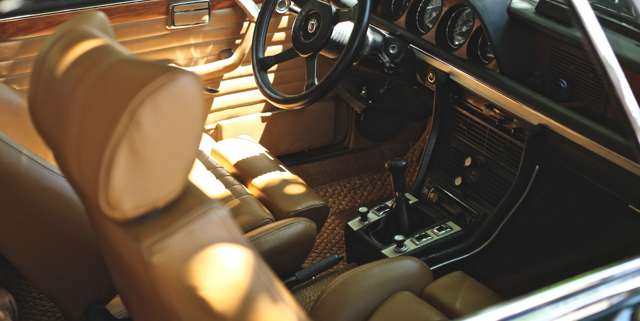
Creating colour harmony in car interiors is essential to optimizing aesthetic appeal. Image Source: Unsplash user Sean DuBois

In today’s rapidly evolving automotive industry, consumers are given options few ever dreamed of only a few years ago. Cars are now the sites of some of the most innovative technologies available. They are bringing performance and safety to extraordinary new heights and even transforming what we imagine cars to be. While we marvel at unprecedented performance and are comforted by advances in safety, aesthetics remain a critical component of automotive appeal. In fact, a 2014 study by AutoTrader on how consumers choose new cars found that it was “appearance more than anything else that appealed to participants.”

Colour harmony in car interiors may not be the first thing consumers think of when considering the aesthetic appeal. In fact, interior colour matching is largely taken for granted precisely because car manufacturers have become so successful at achieving it. But when interior car components don’t match, consumers notice. Not only does this disrupt aesthetic appeal, it can also call into question the overall quality of the car; if a manufacturer has failed to get the basics right, what else have they missed? As such, it is imperative to seek out the best possible colour measurement tools to ensure accurate colour matching.

car-interior-2.jpg

With hundreds of parts manufactured around the globe, ensuring colour harmony can be challenging. Image Source: Unsplash user Nathan Lindahl


Read  Colour Variations in Plastics: You Say Lime, I Say Chartreuse -- What Is It Really?

The Challenges of Colour Harmony in Car Interiors

Creating colour harmony in car interiors may be a fundamental building block in the manufacturing process, but it isn’t easy. A car interior is made up of hundreds of different parts that must co-exist in an aesthetically pleasing fashion and any one of which is vulnerable to unwanted colour variation. These parts are also comprised of a wide variety of different materials, from smooth, glossy plastics to textured leathers to smooth wood, all of which has its own unique geometric properties that impact how colour is experienced. Because components sit right alongside each other within cars, colour mismatch quickly becomes evident.

Another major challenge to ensuring colour harmony is the nature of the modern car industry itself. “The rapid globalization of industrial supply chains has created an urgent need to efficiently qualify materials at a variety of manufacturing sites across the world,” says Diane Geisler.

For example, a car may receive its headliner from a plant in Mexico, the leather trim for the seat from Turkey and the vinyl for the dashboard from the United States. All of these components must have the same colour appearance to achieve the interior harmony intended by the designer and valued by the consumer.

Relying on visual assessment to determine colour harmony is never an adequate colour quality control method owing to its inherent variation. As noted in Plastics, visual assessment is “extremely subjective, as colour vision deficiencies, mood, lighting, or even social pressure can affect perceptions of whether a colour is acceptable or not.” And in global supply chains, where colour information must be communicated across operators and manufacturing sites, reliance on visual assessment is simply impossible.

car-interior-3.jpg

Spectrophotometers offer the best solution for the colour measurement challenges inherent in today’s automotive industry. Image Source: Flickr user Land Rover MENA

INFO  Get More Information

Instrumental Solutions for Creating Colour Harmony

In light of the challenges inherent to creating colour harmony in car interiors, integrating objective colour measurement throughout production is essential to ensuring correct and consistent coloration. Ken Phillips, market development manager at HunterLab, explains, “Colour measurement is an aspect of quality assurance and quality control used to detect the presence or absence of colour, to quantify a product’s colour in ‘colour space,’ and to compare a product colour to that of a known standard for ‘pass/fail’ purposes during incoming raw material QC and during production.”

While modern cars are technological marvels in themselves, automotive colour measurement requires the use of some of the most advanced technologies available to ensure accurate colour matching. Spectrophotometers offer the highest level of quality control for truly objective colour measurement. The sophisticated optical geometries of these instruments allow you to capture bothcolour and appearance data to monitor overall colour harmony even in the presence of vastly different materials. The data obtained by spectrophotometric analysis provides a universal language that makes it possible to create colour standards, monitor colour behavior, and communicate colour information across sites, operators, and materials.

Spectrophotometric data, however, doesn’t just allow you to measure the colour of automotive components in isolation; they also give you the information you need to improve the quality and efficiency of your manufacturing process. “In the past, the goal of colour measurement was narrow in focus, basically that of understanding the colour properties of a particular sample or product and its difference when compared to a standard,” says Phillips.

Today it is about understanding a process that the process can be improved. The ability to collect data at multiple points throughout a workflow, and share that data with an organization or supply chain where it can be acted on is critical in helping companies improve their processes, reduce operating costs, improve efficiencies, and improve stakeholder and shareholder value.

In other words, spectrophotometers give you the data you need to analyze your manufacturing process around the globe to find areas of vulnerability and take corrective action. In an economic environment that requires increased agility, flexibility, and efficiency, this is essential for minimizing waste while enhancing overall quality.

HunterLab Innovation

HunterLab has been a leader in the field of colour measurement for over 60 years. Today we offer a comprehensive line-up of portable, benchtop, and in-line spectrophotometers that has been developed in response to the needs of our customers in the automotive industry. Combined with our customizable software packages, HunterLab instruments offer the highest level of colour quality control available today and provide innovative solutions to even the most vexing colour measurement challenges. Contact us to learn more about our renowned products and world-class customer support services.