Many factors impact an individual’s colour perception, so not all humans see colour the same way. Read more about how humans see colour and what can affect the ways that we perceive colour.

How Humans See Colour

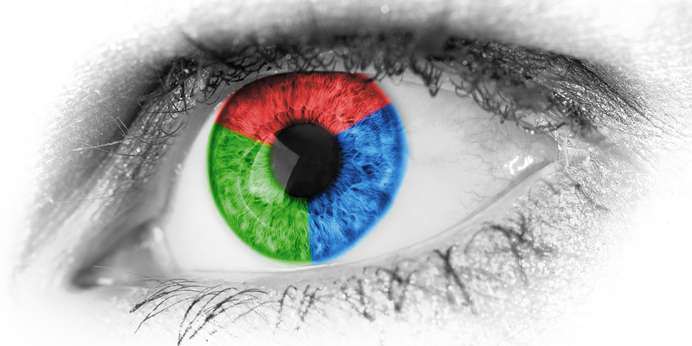
When light hits an object, the item absorbs some light and reflects the rest. This reflected light penetrates the human eye and the lens focuses it into the retina. The retina has cones and rods that process the light into nerve impulses. This transmits a signal to the brain, resulting in seeing a colour. Colour is powerful, even influencing how we see certain businesses because of their branding styles.

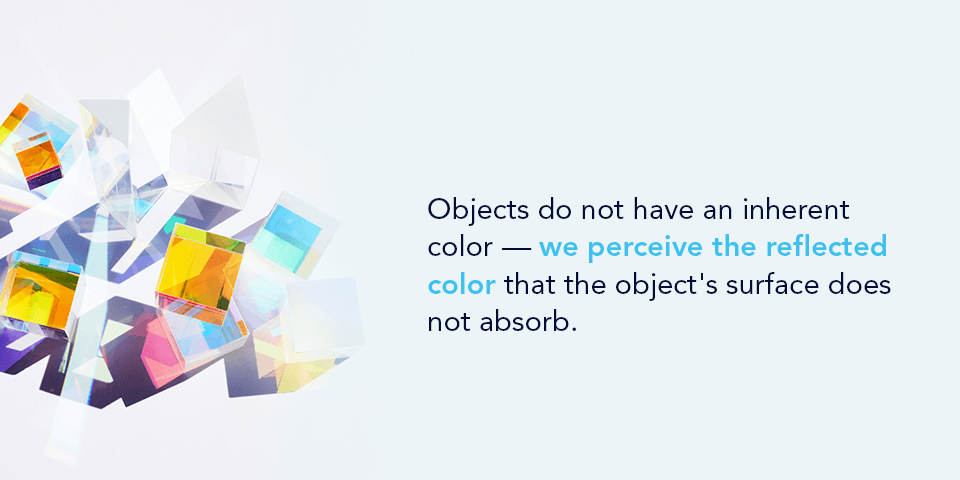
Objects do not have an inherent colour — we perceive the reflected colour that the object’s surface does not absorb. A red delicious apple isn’t really red because the apple reflects the wavelengths we perceive as red and absorbs the rest. When all the wavelengths are reflected, the object appears white. When the object’s surface absorbs all the wavelengths, the object appears black.
01-Objects-do-not-have-an-inherent-color.png
Read  Colour Meanings and Communication

Factors That Can Affect Colour Perception

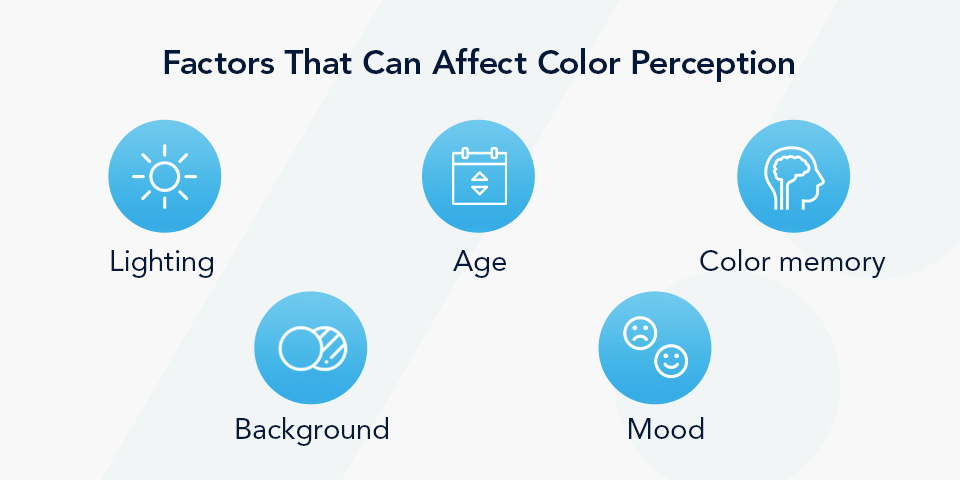
Here are several aspects that can affect the ways we perceive colour:

  • Lighting: The colour of the light will determine the colour your brain sees. If you look at a red cup under fluorescent lighting versus natural lighting, the red shade may look different in each environment.
  • Age: Eye muscles lose their strength with age, so as you get older, your eyes are less responsive to lighting changes. The retinal cells in older people are less sensitive, impairing their ability to see colour contrasts.
  • Colour memory: Memory affects a person’s ability to see colours, and time and distance also negatively impact colour memory. It would be difficult to match a green bracelet to your green sweater at home because the memory of your sweater will not accurately portray its colour.
  • Background: The background of the object you’re evaluating will affect your ability to perceive the object’s colour. This phenomenon is called simultaneous contrast.
  • Mood: Your mood may impact your perception of colours. A person who feels sad may have more trouble identifying colours on the blue-yellow spectrum than a person who feels happy. There is a link between depression and a decreased retina response, and the dopamine neurotransmitter affects colour perception.
02-Factors-That-Can-Affect-Color-Perception.png
INFO  Get More Information

Contact HunterLab Today

At HunterLab, we go beyond the human eye for precise colour measurement and appearance to ensure quality. For more information about colour measurement, contact HunterLab online. You can also read our blog for informative posts about colour perception and more.